

When Is the Best Time to See Mt. Fuji? A Photographer’s Guide to Kawaguchiko
Updated: Jul 17
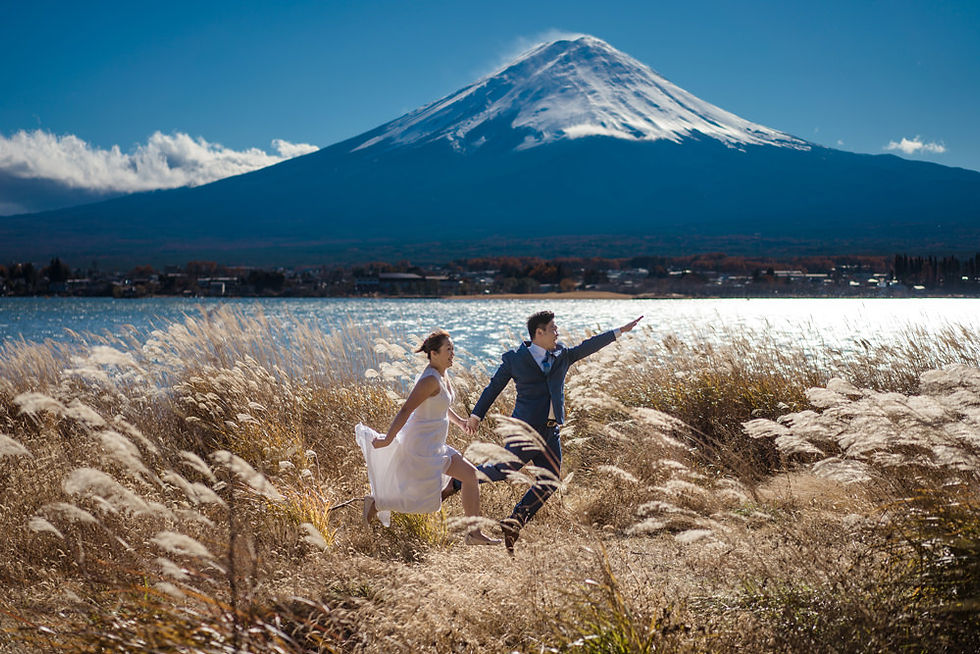
Every month, we receive inquiries from couples and families from around the world who dream of having their photos taken with Mt. Fuji.
By far the most popular request is a proposal with Mt. Fuji in the background.
It sounds simple.
Travel to Kawaguchiko, wait for a sunny day, and take beautiful photos.
Unfortunately, it doesn’t always work that way.
One of my biggest surprises happened about 15 years ago.
My wife and I took a trip to Kawaguchiko on what looked like a perfect sunny day. We expected to enjoy the view of Mt. Fuji all afternoon.
Instead, the mountain appeared for only about 10 minutes before disappearing behind the clouds for the rest of the day.
After driving nearly two hours from Tokyo, it was a disappointing lesson.
Since then, I’ve photographed proposals, pre-weddings and family sessions around Mt. Fuji in every season.
If you’re planning a trip to Kawaguchiko, here are a few things I’d love you to know before you go.
Why is Mt. Fuji so difficult to see in summer?

One of the most common things I hear from visitors is:
“The weather was beautiful… but we couldn’t even see Mt. Fuji.”
So why does this happen?
July and August are the most humid months of the year in Japan. The moisture in the air creates haze, making distant mountains much harder to see—even on sunny days.
As the morning goes on, warm air rises along the mountain and clouds begin to form around the summit. It’s very common for Mt. Fuji to disappear behind clouds by mid-morning.
That’s why a sunny forecast doesn’t always mean a clear view of Mt. Fuji.

Here’s a chart I recently created showing how often Mt. Fuji is visible throughout the year.
The data is based on observations made at around 8:00 a.m., when visibility is generally better than later in the day.
The chart shows the percentage of days when:
The entire mountain was visible
Only part of the mountain was visible
Mt. Fuji wasn’t visible at all
As you can see, June through August are by far the most challenging months if you’re hoping to see Mt. Fuji.
In some summer months, you may only get about three days in an entire month when Mt. Fuji is fully visible.
The Best Season to See Mt. Fuji - winter

If your dream is to see Mt. Fuji at its very best, I always recommend during the winter, November through February.
The air is much drier during winter, so visibility is dramatically better than in summer. The mountain is also covered with snow, creating the iconic view that most people imagine when they think of Mt. Fuji.
I still remember visiting Lake Yamanaka one January with my wife and our lovely dog, Anz.
The view was unbelievably clear.
If Mt. Fuji in summer looks like HD, winter feels like 8K.
It might sound like an exaggeration, but the difference really is that dramatic.
Summer Mt. Fuji Looks Very Different

Another thing many visitors don’t realize is that Mt. Fuji has almost no snow during summer.
The snow gradually melts through spring, and by June most of the summit is no longer white.
It’s still a beautiful mountain, but it’s quite different from the snow-covered Mt. Fuji that appears in postcards and travel brochures.
Snow usually begins returning in autumn, with the most beautiful winter scenery from November through early spring.
Early morning is the best to see Mt Fuji

Choosing the right season is important.
Another important thing is, choosing the right time.
If you want the best chance of seeing Mt. Fuji clearly, I recommend photographing between sunrise (around 6:00 a.m.) and 9:00 a.m.
Throughout the year, Mt. Fuji is usually at its clearest in the early morning. As the day goes on, clouds tend to form around the mountain, often hiding it by late morning or early afternoon.
This tendency is especially noticeable during the summer months, when Mt. Fuji is much more likely to be hidden by clouds as the day progresses.
Autumn and winter generally offer better visibility, and there are days when Mt. Fuji remains crystal clear well into the afternoon. However, Mt. Fuji can still become partially hidden by clouds around midday.

The photo below was taken at Lake Kawaguchiko in October from the exact same location.
At 8:00 a.m., Mt. Fuji was beautifully clear against a blue sky. By 12:00 p.m., clouds had gathered around the mountain, dramatically changing the view in just a few hours.
October is generally one of the better months for viewing Mt. Fuji, yet even during autumn, the mountain can become partially hidden by midday.
What If Mt. Fuji Doesn’t Appear?
Mountain weather changes quickly.
I’ve seen forecasts change from sunny to rainy just one day before a proposal.
The good news is that we always have a backup plan.

Option 1 — Change the Time
Sometimes the morning is rainy, but the afternoon becomes perfectly clear.
Whenever possible, I recommend keeping the entire day flexible.
One couple was planning to propose at Lake Yamanaka at 8:00 a.m., but heavy rain was forecast until late morning.
Instead, we postponed the proposal until 2:00 p.m.
The rain cleared, Mt. Fuji appeared, and everything worked out beautifully.

Option 2 — Change the Location
This couple originally planned to propose at 8:00 a.m. at Nagasaki Park. I arrived about 40 minutes early to check the location, only to find heavy rain—even though the forecast had predicted sunshine.
The rain stopped after about 30 minutes, but Mt. Fuji was completely hidden, and the ground at the park had turned into mud. I immediately suggested moving the proposal to Oishi Park instead.
Although Mt. Fuji never appeared during the proposal, the beautiful gardens, greenery, and flowers created a wonderful setting for their special moment. After spending about an hour taking photos around the park, we decided to stop by the original location one last time.

To our surprise, the clouds slowly began to clear, and we were able to finish the session with a few photos of Mt. Fuji in the background.
Sometimes, a little flexibility can turn an unexpected situation into the perfect ending.
Option 3 — Enjoy Kawaguchiko Anyway
Even without Mt. Fuji, Kawaguchiko is still one of the most beautiful places in Japan.
There are peaceful lakes, forests, gardens, traditional streets and wonderful seasonal scenery.
If Mt. Fuji decides to hide behind the clouds, we’ll simply create beautiful photographs somewhere else.
Because in the end, it’s your memories—not just the mountain—that matter most.
Kitaguchi Hongu Fuji Sengen Shrine Autumn color of Kawaguchiko in mid November
Planning a Photo Session at Mt. Fuji?
If you’re visiting Japan and dreaming of photos with Mt. Fuji, we’d be happy to help.
We’ll keep an eye on the weather together, suggest the best time and locations, and always have a backup plan if conditions change.
After photographing countless proposals, couples, and families around Kawaguchiko over the years, we’ve learned that flexibility often makes the biggest difference.
Whether Mt. Fuji is perfectly clear or hiding behind the clouds, our goal is always the same—to create photographs you’ll treasure long after your trip to Japan.


About bozphoto & styles
We’re a photo team based in Japan, here to capture your adventures—whether you’re proposing, celebrating, or just exploring together.
From the streets of Tokyo to the views of Mt. Fuji, we love traveling across Japan to create natural, meaningful images of your time here.
If you’re ready to turn your trip into something truly unforgettable, we’d love to be part of it.


https://soicauxsmb.com/ bữa thấy bạn bè nói nhiều quá nên mình cũng ghé thử cho biết. Mình không đọc sâu đâu, chủ yếu lướt xem họ trình bày ra sao thôi. Vào cái là thấy giao diện khá dễ chịu, không bị rối mắt kiểu nhồi chữ tùm lum. Mấy phần thông tin được chia thành từng khối nhìn rõ ràng nên kéo xuống cũng nhẹ nhàng, không bị “ngập” dữ liệu. Mình thích nhất là cách họ để số liệu theo dạng bảng/cột gọn gàng, nhìn qua là hiểu ý chính, khỏi phải căng mắt dò. Menu cũng nằm chỗ dễ thấy nên bấm qua lại vài mục cơ bản rất nhanh. Nói chung mới vào vài phút đã quen…
https://bongdanet.biz/ mình mới ghé thử vì thấy bạn bè nói qua, kiểu vào cho biết chứ không định đọc kỹ. Vừa mở ra là thấy phần tỷ số/livescore chạy cập nhật liên tục, nhìn phát là nắm được trận nào đang diễn ra mà không phải bấm vòng vòng. Mình thích cái cách họ để bảng dữ liệu dạng cột, kéo xuống vẫn gọn gàng chứ không bị loạn chữ. Với lại có một khung “nhận định bóng đá hôm nay” tách riêng nên lướt ngang cũng nhận ra ngay, không bị chìm giữa đống thông tin. Nói chung giao diện nhìn khá thân thiện, nhất là cái block livescore realtime nằm nổi bật ngay trên trang.
https://xosoplus.mobi/du-doan-ket-qua-xo-so-sieu-chinh-xac-hom-nay.html mình bấm vào vì thấy bạn bè nói qua, chủ yếu tò mò xem trang họ sắp xếp nội dung thế nào thôi. Vừa vào đã thấy bài dự đoán theo ngày (kiểu ghi rõ 20/07/2026) nên nhìn phát là biết đang xem đúng mục nào, khỏi phải mò. Mình cũng thích cái phần “Mục lục” đặt ngay đầu, bấm cái là nhảy xuống các đoạn dự đoán theo miền khá nhanh, không bị cuộn mỏi tay. Giao diện nhìn đơn giản, chữ và khối nội dung tách rõ nên đọc lướt cũng ổn. Kéo xuống dưới còn có bảng lô tô trình bày theo cột “Đầu/Đuôi” khá gọn, nhìn không rối mắt.
Saw a scratch planet clicker reference pop up while browsing an old forum thread, so I clicked through out of curiosity. The site ran light, no lag even with a few other tabs open at the same time. Upgrade info is laid out in a way that's easy to follow without needing instructions. Spent a bit of time with it and it had that familiar idle game pull.